 Over the past few decades I have worked in different consulting roles; as an independent consultant; as a member of a large consulting team; and as owner’s representative managing consultants. I have worked on projects where the mining company has their own external consultants that they have worked with for years (decades), learning that there are roles for both the independent consultant and larger consulting firms.
A previous blog (“9. Large Consulting Firms or Small Firms – Any Difference?”) discusses where large and small consultants fit into the overall picture. Large technical teams are required where there are broader scopes of work, significant effort levels, and where multiple skills sets are needed.
Independent Consultants
Independent consultants offer a unique service. They are well suited for assisting a project Owner directly, either independently or as part of an overall corporate advisory team. They may work on a part time basis, so don’t bring the fixed financial liability of a salaried employee. Furthermore, non-technical junior mining management should always have easy access to internal technical skills for brainstorming ideas or receiving technical direction.
Even if some of the management are technically oriented, having independent thought is valuable. The question is whether the consultant should be a cheerleader or be a true independent observer.
 Independent consultants part of the management team will differentiate themselves from large engineering firms in several ways.
-
They don’t bring a lot of extra personnel onto a job. They focus on their niche experience and on what is needed. One can always pull in other expertise when needed.
-
They can provide unbiased advice. Larger firm sometimes have business development conflicts. The independent consultant does not have the motivation to win a feasibility study or EPCM contract. They motivation is to stay employed, so they want to deliver quality input and feedback.
-
A company can develop long term working relationships with their independent consultants. Everyone gets familiar with each other’s objectives and goals. Large engineering firms can be revolving doors with people continually moving on to other roles or even other firms.
-
Independents can work efficiently at a pace of their own choosing. This can result in lower costs and faster deliverables. I have worked with many independent consultants that work extra time to meet their client targets.
-
Independents can provide long term stability since they generally won’t have any employee turnover. Personally I was involved for over 15 years with a bauxite mining operating in Suriname. The expat technical staff at the mine site had regular turnover. Ultimately I ended up being the only constant for the mine operator, knowing the history and why things were done they way they were. I even had copies of old reports they could no longer find in their archives. We avoided re-inventing the wheel each time a new technical manager was brought in.
Consultants and Stocks Options

A point of conversation is whether the independent consultants should receive stock option compensation. I have worked under both situations.
Awarding stock options might eliminate the “independent” nature of the relationship and hence negate the ability to sign off as an independent QP. However in some circumstances, the company may not require the consultant to be a QP since they mainly act in an advisory role. A question to ask is whether the company wants “independent” advice from someone who may be a shareholder or option holder?
One advantage of awarding stock options is that the consultant may become more beholden to the project. They feel it is their project too, rather than simply acting as a paid adviser. They may have a longer term interest in being involved with the project and the company, and are less likely to move on.
Conversely the company may prefer the consultant doesn’t have any direct ownership so that their advice can be viewed as being unbiased. Having a contrarian viewpoint on corporate plans may be a good thing.
Overall I feel that awarding stock options is a good way to foster long term commitment from the consultant. It can be easier for them to walk away without such an inducement to stay, but there are no guarantees.
Conclusion


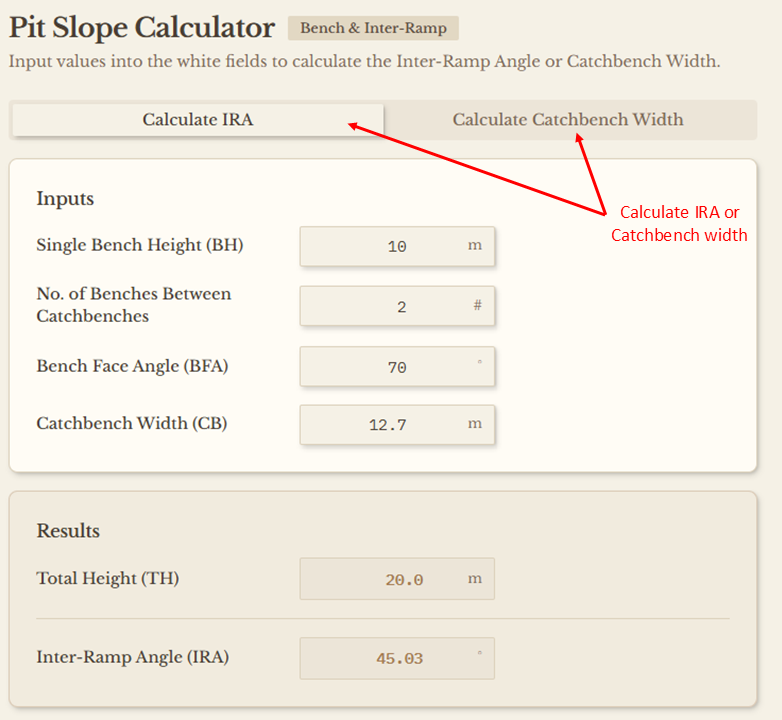
 An open pit wall will consist of a series of stacked benches. Geotechnical engineers will normally provide the pit slope design criteria based on the inter-ramp angle (“IRA”) for various sectors around the pit. The IRA represents the toe-to-toe slope angle, as shown in the diagram below.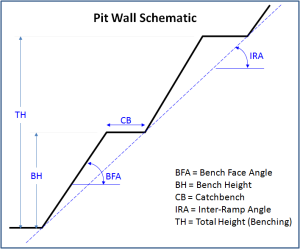

 I have heard from geologist colleagues that financing grass-roots exploration is still extremely difficult. That is unless company management has had past successes or is well connected to the money scene.
 The bottom line is that in order for a project (and the management team) to get serious attention from potential investors is to make sure there is a realistic view of the project itself and have a realistic path forward.
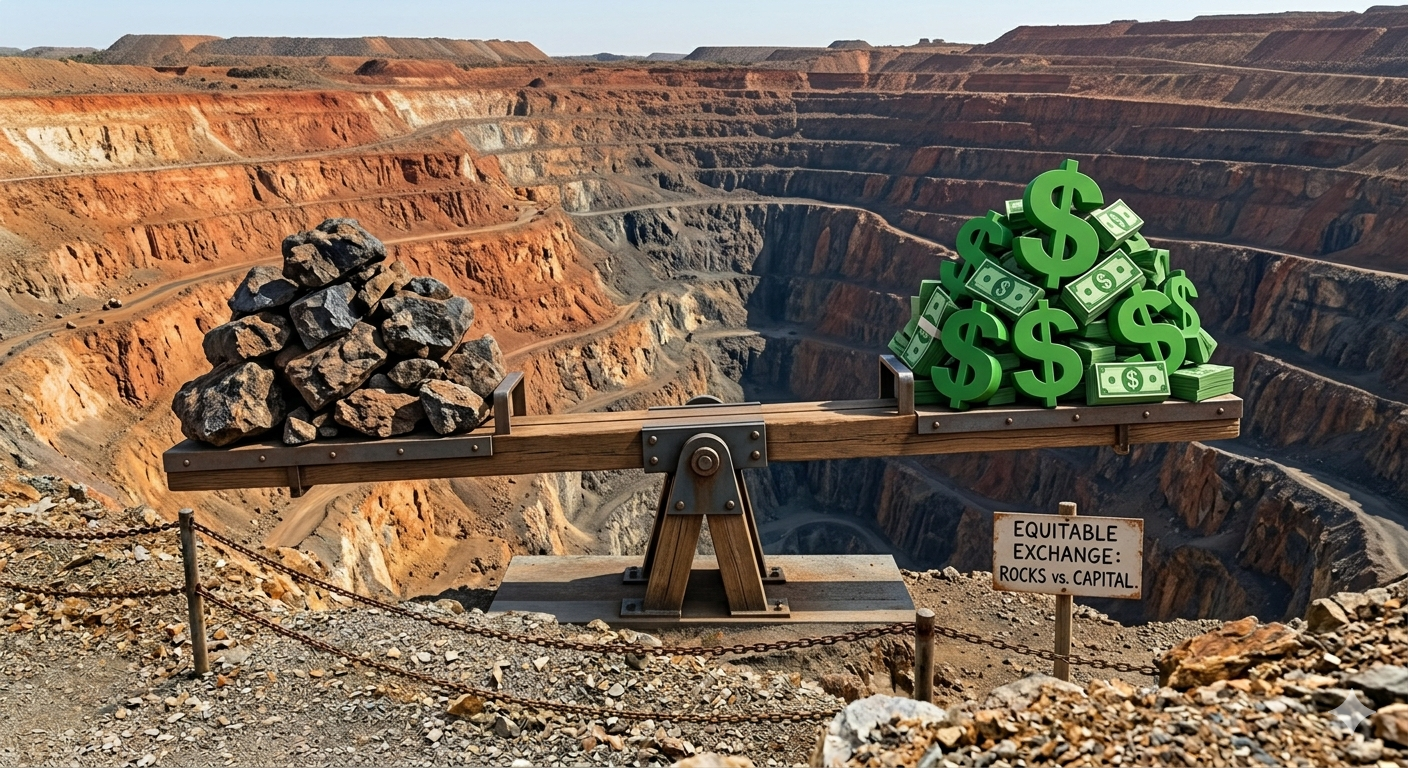 In my view, one of the most important things you need to understand about your orebody is the insitu rock value. Hopefully it is economic, i.e. an ore value. Its the key driver in shaping the economics of any mining project.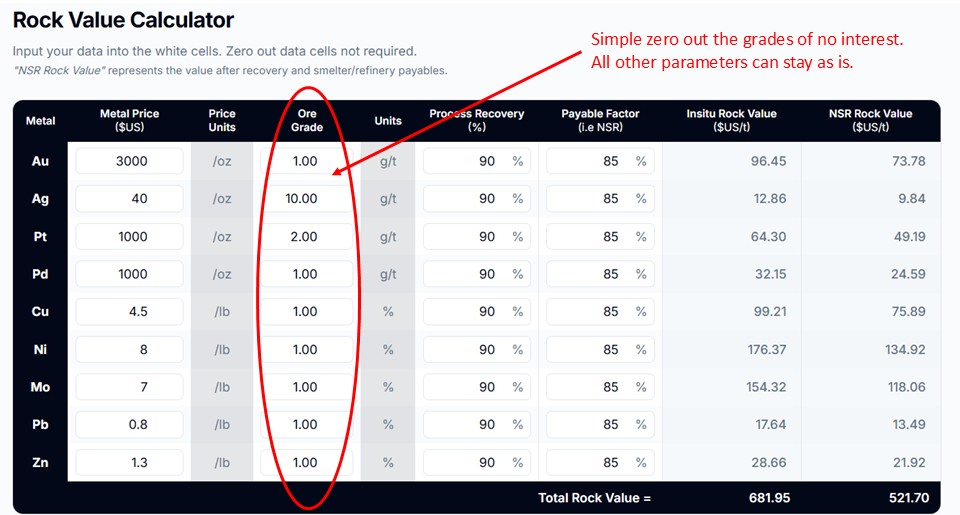


 Gather your team around their computers and fire up screen sharing software like Teams, GoToMeeting, Skype, or Zoom. Give control of the mouse to someone who knows the site well. Here are some of the things you can do on your group tour.
 In my personal experience I find that larger consultants are best suited for managing the large scale feasibility studies. This isn’t because they necessarily provide better technical expertise. Its because they generally have the internal project management and costing systems to manage the complexities of such larger studies.
 For certain aspects of a feasibility study, one may get better technical expertise by subcontracting to smaller highly specialized engineering firms. However too much subcontracting may become an onerous task. Often the larger firms may be better positioned to do this.
 One of the purposes of an early stage study is to see if the project has economic merit and would therefore warrant further expenditures in the future. An early stage study is (hopefully) not used to defend a production decision. The objective of an early stage study is not necessarily to terminate a project (unless it is obviously highly uneconomic).


 Some of the models I have reviewed will build the entire operating cost (mining, processing, G&A) in one grand file. They will build in the capital cost too and finally provide the economic model… all in one spreadsheet!