


 Previously I posted a blog about different approaches that mining engineers use to forecast dilution in an open pit setting. You can read the blog at this link. Since that time I have been in touch with the author of a technical paper on dilution specifically related to underground operations. Given that my previous blog was from an open pit perspective, an underground discussion might be of interest.
The underground paper is titled “Mining Dilution and Mineral Losses – An Underground Operator’s Perspective” by Paul Tim Whillans. You can download the paper at this link.
Here is the abstract
For the underground operator, dilution is often synonymous with over-break, which mining operations struggle to control. However, there are many additional factors impacting dilution which may surpass the importance of overbreak, and these also need to be considered when assessing a project. Among these, ore contour variability is an important component of both dilution and mineral losses which is often overlooked. Mineral losses are often considered to be less important because it is considered that they will only have a small impact on net present value. This is not necessarily the case and in fact mineral losses may be much higher than indicated in mining studies due to aggregate factors and may have an important impact on shorter term economics.
My key takeaways
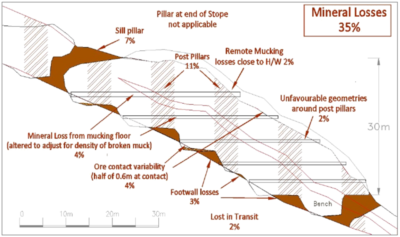 I am not going into detail on Paul’s paper, however some of my key takeaways are as follows. Download the paper to read the rationale behind these ideas.
-
Over-break is a component of dilution but may not be the major cause of it. Other aspects are in play.
-
While dilution may be calculated on a volumetric basis, the application of correct ore and waste densities is important. This applies less to gold deposits than base metal deposits, where ore and waste density differences can be greater.
-
Benchmarking dilution at your mine site with published data may not be useful. Nobody likes to report excessively high dilution for various reasons, hence the published dilution numbers may not be entirely truthful.
-
Ore loss factors are important but can be difficult to estimate. In open pit mining, ore losses are not typically given much consideration. However in underground mining they can have a great impact on the project life and economics.
-
Mining method sketches can play a key role in understanding underground dilution and ore losses, even in today’s software driven mining world.
-
Its possible that many mine operators are using cut-off grades that are too low in some situations.
-
High grading, an unacceptable practice in the past, is now viewed differently due to its positive impact on NPV.
-
Inferred resources used in a PEA can often decrease significantly when upgraded to the measured and indicated classifications. If there is a likelihood of this happening, it should be factored into the PEA production tonnage.
-
CIM Best Practice Guidelines do not require underground ore exposure for feasibility studies. However exposing the ore faces can have a significant impact on one’s understanding of the variability of the ore contacts and the properties of minor faults.
Conclusion
 The bottom line is that not everyone will necessarily agree with all the conclusions of Paul’s paper on underground dilution. However it does raise many issues for technical consideration on your project.

 You a create your own checklist but if you would like a copy of mine just email me at KJKLTD@rogers.com and let me know a bit about how you plan to use it (for my own curiosity). Specify if you would prefer the Excel or PDF versions.
 Mining due diligence exercises can be interesting and great learning experiences, even for senior people that have seen it all. However they can also be mentally taxing due to the volumes of information that one must find, review, and comprehend, all in a short period of time.
 From 1997 to 2000 I was involved in the feasibility study and initial engineering for the Diavik open pit mine in the Northwest Territories. As you can see from the photo on the right, groundwater inflows were going to be a potential mining issue.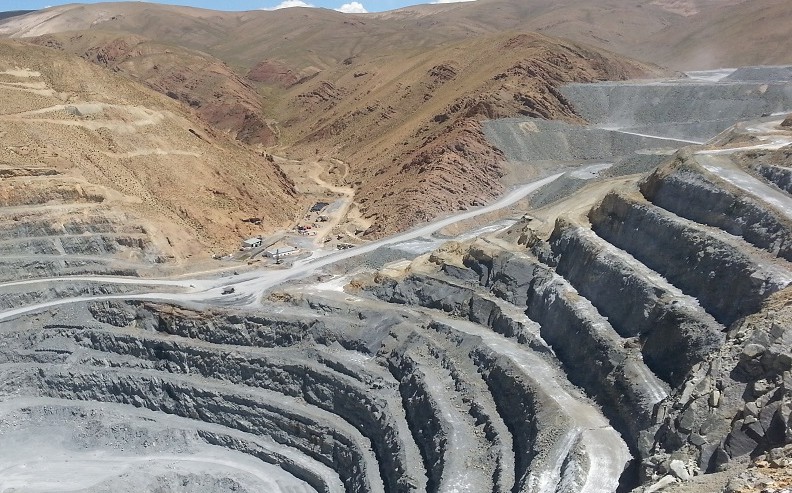
 Groundwater modelling of a fractured rock mass is different than modelling a homogeneous aquifer, like sand or gravel. Discrete structures in the rock mass will be the controlling factor on seepage rates yet such structures can be difficult to detect beforehand.
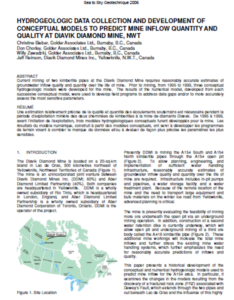 The 2000 paper describes the field investigations, the 1999 modeling assumptions, and results. You can download that
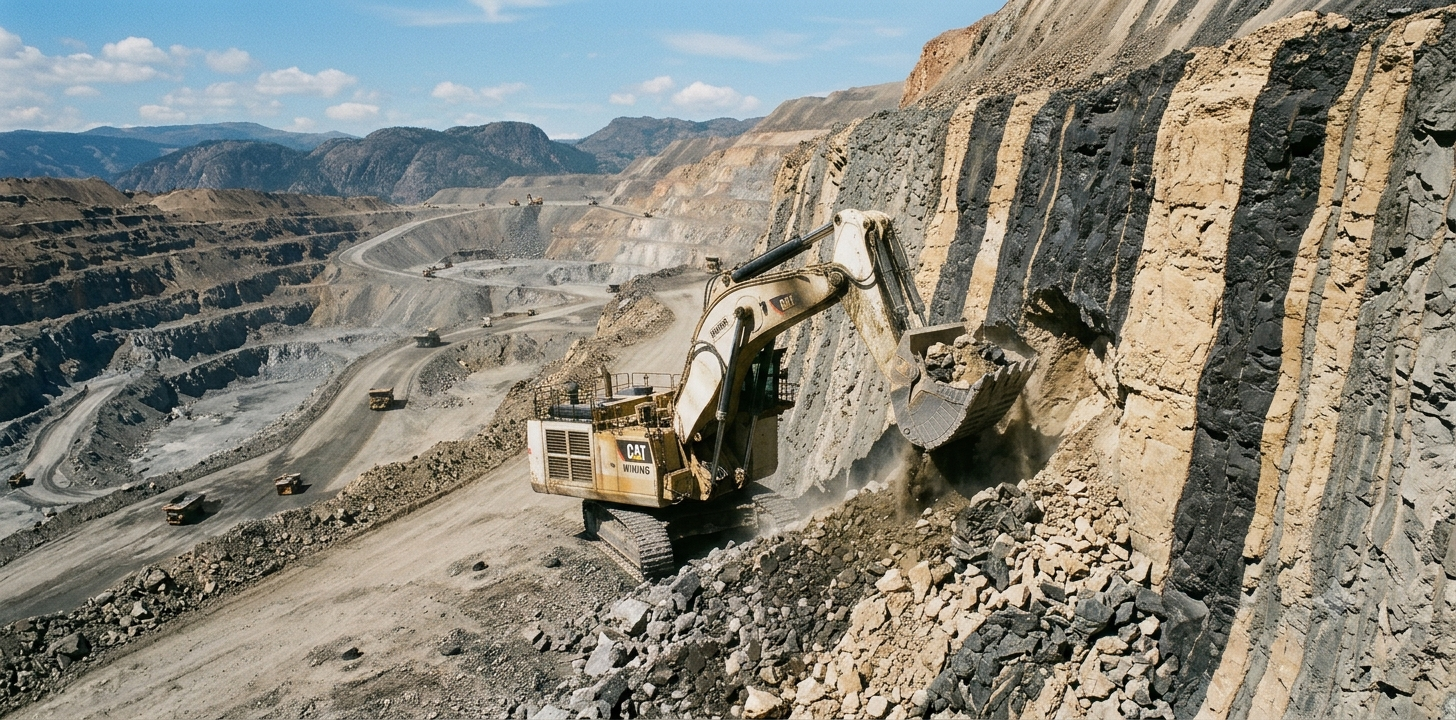 Over the years of working on studies and reviewing them, ore dilution often does not see much discussion but it is one of the most important technical and operational issues. It plays a key role in the success of a mining operation, particularly underground operations. In studies, it can be too low or too high, too optimistic or too pessimistic.

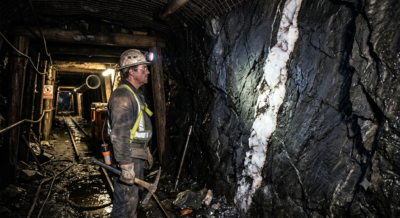 The goal of dilution estimation is not to demonstrate fancy mathematics, but to forecast what it will actually be. My personal experience is that people tend to focus on the value of the dilution percentage and whether it seems reasonable in the end. There seems to be less focus on the logic for the dilution approach used. It is not easy to forecast dilution yet it can be an incredibly important number.

 I like the concept that Globex are promoting. I like the idea of having a one-stop shop that acquires and options out exploration properties to mining companies looking for new projects.
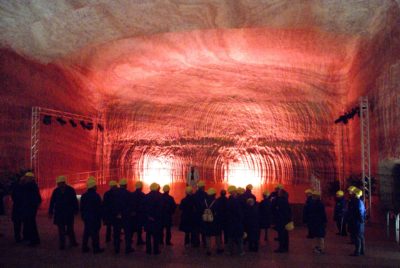 His topic is interesting and relevant to today’s mining industry. Paul raised many thoughtful points supported by data. He gave me permission to share his information.
 I agree with many of the points raised by Paul in his study. The mining industry has some credibility issues based on recent performance and therefore understanding the causes and then repairing that credibility will be important for the future.


 The accepted tailings risk therefore becomes a subjective factor.
 Environmental groups continually discuss ways of forcing regulators and mining companies to take action against the risk of tailings failure. This is commendable.
 Recently we have seen a trend of higher cash costs at operating mines when commodity prices are high. Why is this?
 Do the opposite
 Different companies have different corporate objectives and each mining project will be unique with regards to the impacts of cutoff grade changes on the orebody.