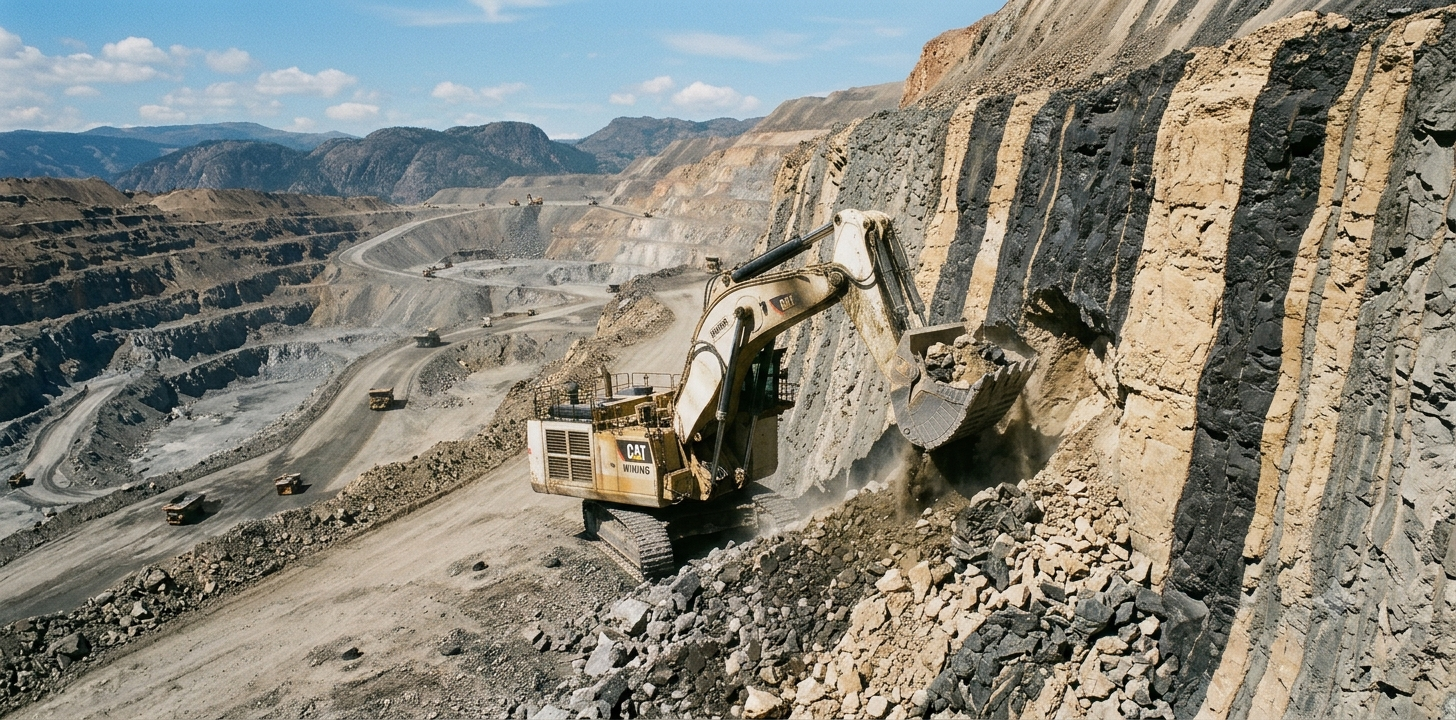
Mining Dilution Prediction – Its Not That Simple

mining reserve estimation
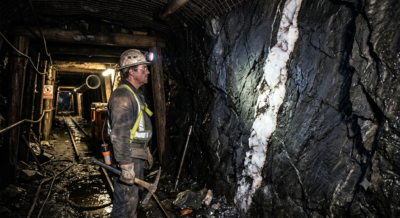
Over the years of working on studies and reviewing them, ore dilution often does not see much discussion but it is one of the most important technical and operational issues. It plays a key role in the success of a mining operation, particularly underground operations.  In studies, it can be too low or too high, too optimistic or too pessimistic.
Project economics (NPV, IRR) can see significant impacts depending on the applied dilution factor.  They are numerous instances where mines have been put into production, and excess dilution has subsequently led to their downfall. At the West Red Lake Madsen mine, gold head grades  were forecast to be around 7-8 g/t (2025 PFS Table 22-1) but in reality production head grades are closer to 3.5-4.3 g/t (July 15, 2026 NR).  Is this due to dilution or a change in mining plans – I don’t know – but dilution could be part of the reason.
Hence mine designers need to take the time to think about what dilution will be applied in the production forecast and the basis for that decision.

Everyone has a preferred dilution method.

Dilution is the mixing of waste with ore during mining, sometimes by design and sometimes unavoidable, but never desired. It must be applied in the mine plan to forecast the head grade that the processing plant will see.   Over the years I have seen several different approaches for modelling and applying dilution in a mining study.
It seems that engineers and geologists have their own personal favorites and tend to stick with them.   Here are some common dilution approaches that I have seen (and used myself).
1. Pick a Number:
This dilution approach is quite simple and sometimes used in very early stage assessments.  Just pick a number that sounds appropriate for the orebody and the mining method.  There might not be any solid technical basis for the dilution value, but as long as it seems reasonable, it might go unchallenged.  Possibly one uses a dilution value commonly seen in other studies.
2. SMU Regularization:
This dilution approach takes each resource model percent block (e.g.  a block is 20% waste and 80% ore) and mathematically regularizes it into a single Selective Mining Unit (“SMU”) block with a weighted average grade.  The SMU compositing approach will dilute the ore in the block with the contained waste.  Ultimately this step might convert some highly diluted ore blocks to waste once a cutoff grade is applied.  Internal ore blocks that are 100% ore would not be diluted.  Some engineers may apply an additional dilution factor beyond this SMU compositing to be safe, while others will consider the block model fully diluted at this step and move onto scheduling.
3. Diluting Envelope:
This dilution approach assumes that a 1 to 3 metre wide waste envelope surrounds the ore zone.  It assumes that the envelope will be mined along with the ore.  The width of the waste envelope may be based on the blast hole spacing used to define ore and waste contacts for mining.
The diluting grade of the waste envelope can be estimated or one may simply assume a more conservative zero-diluting grade.   In this approach, an average dilution factor can be applied to the final production schedule to arrive at the diluted tonnages and grades sent to the process plant.
With this approach, narrow orebodies would be diluted more heavily than bulk orebodies.
4. Diluted Block Model:
This dilution approach uses more complex logic to look at individual blocks in the block model.  One determines how many waste contact sides each block has, and then mathematically applies dilution based on the number of those contacts.  A block with waste on three sides would be more heavily diluted than a block with waste only on one side an edge block).   Usually this approach relies on a direct swap of ore with waste being neighboring blocks.  If a block gains 100 m3 of waste, it must then lose 100 m3 of ore to maintain the volume balance.   The production schedule derived from such a “diluted” block model usually applies no subsequent dilution factor.   Sometimes it can be complex to quantify the % dilution from this approach.
5. Using UG Stope Modelling
I have also heard about, but not yet used, a method of applying open pit dilution by adapting an underground stope
modelling tool.  By considering an SMU as a stope, automatic stope shape creators such as Datamine’s
Mineable Shape Optimiser (MSO) can be used to create wireframes for each mining unit over the entire
deposit. Using these wireframes, the model can be sub-blocked and assigned as either ‘ore’ (inside the
wireframe) or ‘waste’ (outside the wireframe) prior to optimization.

 

When is the Cutoff Grade Applied?

Depending on which dilution approach is used, the cutoff grade will be applied either before or after dilution.   When the dilution approach requires adding dilution to the final production schedule, then the ore / waste cutoff grade will be applied to the undiluted block model (approach #1 and #2).
When dilution is incorporated into the block model itself (#3 and #4), then the cutoff grade is applied to the diluted blocks.
The timing of when the cutoff grade is applied to the model will have an impact on the ore tonnes and head grade being reported.

Applying dilution in pit optimization?

Another occasion when dilution may be applied is during pit optimization.  In the optimization software, there are normally input fields for both a dilution factor and an ore loss factor.   Some engineers will apply an estimated dilution at this step while others will leave the factors at zero.  There are valid reasons for either approach.
My preference is use a zero dilution factor for pit optimization since the character of the ore zones will be different at different revenue factors; hence dilution would be unique to each.   It would be good to examine the impact that the dilution factor has on pit optimization by running with and with to see the results.

Conclusion
The goal of dilution estimation is not to demonstrate fancy mathematics, but to forecast what it will actually be.  My personal experience is that people tend to focus on the value of the dilution percentage and whether it seems reasonable in the end.   There seems to be less focus on the logic for the dilution approach used.  It is not easy to forecast dilution yet it can be an incredibly important number.
Regardless of which approach is being used, ensure that one can quantify the percent dilution being applied – is it 5%  or 20% dilution?
Others may yet have different dilution methods in their toolbox and it would be interesting to hear about them.
Another blog post discusses dilution from an underground mining perspective in a bit more detail.  This discussion was written by another engineer who permitted me to share their paper.    You can read that blog at “Ore Dilution – An Underground Perspective“.
Note: You can sign up for the KJK mailing list to get notified when new blogs are posted. Follow me on Twitter at @KJKLtd for updates and other mining posts. The entire blog post library can be found at https://kuchling.com/library/
For some free mining calculator apps, including project timelines and a simplified cashflow modeller, check out this website https://sites.google.com/view/drillingdown


 

The Mining Bank or eBay for Mining Properties

mining properties
I recently attended the Money Show here in Toronto to learn a bit more about personal finanace, investing strategies, and to check out  the latest stock analysis software.
There was also a trade show, but only one mining company booth was present.  This definitely wasn’t the PDAC.  Interestingly there were about five marijuana company booths, so that is where the promotion is today.
The lone mining company was Globex Mining, here is their website.  They referred to themselves as a “mining bank”, so that was something that peaked my interest.

Mining bank

Speaking with their president, Jack Stoch, he gave me an overview on their business model.  As I understood it, GLOBEX’s model is to acquire a portfolio of mineral properties.  They would try to enhance their value by undertaking some limited geological work.  Finally they would option, JV, or sell the property while retaining an NSR royalty.
Mr. Stoch told me that Globex currently has over 140 land packages in their inventory.  Their properties will be at different stages.  Some have resource estimates, others only mineralized drill intersections, mineral showings, untested geophysical targets, or combinations of these.
They are focusing their acquisitions on lower risk jurisdictions like Quebec, Ontario, Nova Scotia, New Brunswick, Tennessee, Nevada, Washington, and Germany.  They try to acquire historical mines that have old shafts, following the adage the best place to find a new mine is next to an old mine.   They also have some industrial mineral properties.


Globex’s only NSR revenue property right now is a zinc project in Tennessee that can generate a seven-figure royalty each year, when that operation is up and running.  Unfortunately for Globex the zinc operation has not been in consistent operation the last few years.

Its a good concept

I like the concept that Globex are promoting.  I like the idea of having a one-stop shop that acquires and options out exploration properties to mining companies looking for new projects.


I also like the idea of trying to consolidate land packages in an area,  minimizing the patchwork of multiple ownership claims that can hinder advanced development.
Globex hope that by putting time and effort into a bunch of properties a few of them will pay off.  If they can generate sufficient NSR revenues, the company may get to the self-sustaining stage.

Its not a new idea

The idea of companies involving themselves in a portfolio of early stage prospects isn’t new.  This has been being done by EMX Royalty Corp (formerly Eurasian Minerals) for properties around the globe.    Abitibi Royalties is also doing something vaguely similar, whereby they would help fund prospectors in exchange for a long term royalty on a property. There are likely others.
There is a high risk to being successful but the cost of entry is relatively low.
It will be interesting to watch Globex over the longer term to see how many properties they can acquire and how many of these will pay off. Spending a bit of money on mapping and exploration on a property may benefit them by increasing value in the eyes of potential partners.
Statistically, mineral exploration is a high risk game but by limiting expenditures and diversifying the portfolio, some of that risk can be mitigated.
Note: You can sign up for the KJK mailing list to get notified when new blogs are posted.

Does the Mining Industry Employ Interns?

employing interns
Over the couple of years I have been working on a side project in the tech industry.   One of the things that struck me was the hiring of interns, both paid and unpaid.
I’m now aware that interns are being hired in other industries such as legal, politics, journalism, and marketing.  However I have never come across the use of interns within the mining industry.
Intern

Why hire interns?

I was recently talking to a marketing consultant about tips on tech marketing and one of the suggestions she made was to hire an unpaid intern.  They would do much of the legwork of finding sales contacts and establishing contact with them.
My first question was why would anyone work for free?  There are  three main reasons:
  1. For school credit; as part of a course credit in college or university where an internship is part of the program requirement.
  2. For experience; it is difficult to get a real job without experience and so the internship teaches, builds  experience, and establishes a portfolio of work.
  3. Networking; building up industry connections can possibly lead to permanent work down the road.

Its the right thing to do

At first I was taken aback at the thought of asking someone to work for my company for free.  Are we that cheap?
Thinking about it further, if you are paying someone a salary the expectation is that they should be somewhat skilled at their job.  I have come to realize that the internship may actually be a win-win for both parties.

Its a win-win

The company gets a chance to learn about potential employees and also gets productive service from them.
The intern gains employment experience and learns about the realities of the business world.  Students have already paid the schools to teach them.  Now businesses can help teach them more, but at no cost.   It’s a win-win for both.
So how did our unpaid intern search go?  We posted a free ad on indeed.ca.  Within 72 hours we received over ten replies, of which only 2-3 came close to meeting the actual qualifications.  Some of the applicants had no relevant experience at all.
Possibly in today’s job market people are willing to work for free on the hope that they can get some experience, which will hopefully lead to a permanent job in the future.

Conclusion

The question is whether the mining industry can make use of interns in the areas of geology, engineering, marketing, presentation graphics, websites, etc?
There may be many students or recent grads looking for an opportunity and are willing to do whatever it takes to  advance their careers.
Even if your operating budget can’t afford the cost of hiring another person, you may still have a chance to help out someone new in the industry.
Note: You can sign up for the KJK mailing list to get notified when new blogs are posted.

Underground Feasibility Forecasts vs Actuals

underground costing
I recently attended a CIM Management and Economics Society presentation here in Toronto discussing the differences between actual underground production versus the forecast used in the feasibility study. The presenter was Paul Tim Whillans from Vancouver Canada.
His topic is interesting and relevant to today’s mining industry.  Paul raised many thoughtful points supported by data. He gave me permission to share his information.
The abstract for his paper is inerted below.  The paper can be downloaded at this LINK and here are the presentation slides.

ABSTRACT

“An underground mining study that is done in accordance with NI43-101, JORC or similar reporting code is generally assumed by the public to be representative, independent and impartial. However, it has been well documented by academics and professionals in our industry that there is a sharp difference between the forecasts presented in these underground studies and the actual costs when a mine is put into production.
For underground mines, the risks associated with obtaining representative information are much greater than for surface mining and the cost of accessing underground ore is also proportionally much greater. There is a pressing need to align expectations, by improving the accuracy of projections. This will result in reduced risk to mining companies and investors and provide more reliable information to government agencies, the public, and more importantly, the communities in which the proposed mine will operate.
The objective of this article and an article currently being written titled “Mining Dilution and Mineral Losses” is to:
– Discuss the dynamics of intention that lead to over-optimism;
– Provide simple tools to identify which studies are likely to be more closely aligned with reality;
– Identify some specific points where underground mining studies are generally weak;
– Discuss practices currently in use in our industry that lead to a composite or aggregate effect of over optimism;
– Describe the effects of overly optimistic studies;
– Outline specific changes that are necessary to overcome these challenges; and
– Stimulate discussion and awareness that will lead to better standards.”

Conclusion

I agree with many of the points raised by Paul in his study. The mining industry has some credibility issues based on recent performance and therefore understanding the causes and then repairing that credibility will be important for the future.
Credibility ultimately impacts on shareholder returns, government returns, local community benefits, and worker health and safety; so having a well designed mine will realize benefits for many parties.
If you need more information Paul’s website is at http://www.whillansminestudies.com/
Note: You can sign up for the KJK mailing list to get notified when new blogs are posted.

Ore Stockpiling – Why are we doing this again?

ore stockpile
In many of the past mining studies that I have worked, stockpiling strategies were discussed and usually implemented. However sometimes team members were surprised at the size of the stockpiles that were generated by the production plan. In some cases it was apparent that not all team members were clear on the purpose of  stockpiling or had preconceived ideas on the rationale behind it. To many stockpiling may seem like a good idea until they saw it in action.
Mine Stockpile
In this blog I won’t go into all the costs and environmental issues associated with stockpile operation.  The discussion focuses on the reasons for stockpiling and why stockpiles can get large in size or numerous in quantity.
In my experience there are four main reasons why ore stockpiling might be done. They are:
1. Campaigning: For metallurgical reasons if there are some ore types that can cause process difficulties if mixed  with other ores. The problematic ore might be stockpiled until sufficient inventory allows one to process that ore (i.e. campaign) through the mill. Such stockpiles will only grow as large as the operator allows them to grow. At any time the operator can process the material and deplete the stockpile. Be aware that mining operations might still be mining other ore types, then those ores may need to be stockpiled during the campaigning.  That means even more ore stockpiles at site.
2. Grade Optimization: This stockpiling approach is used in situations where the mine delivers more ore than is required by the plant, thereby allowing the best grades to be processed directly while lower grades are stockpiled for a future date. Possibly one or more grade stockpiles may be used, for example a low grade and a medium-low grade stockpile. Such stockpiles may not get processed for years, possibly until the mine is depleted or until the mined grades are lower than those in the stockpile. Such stockpiles can grow to enormous size if accumulated over many years.  Oxidation and processability may be a concern with long term stockpiles.
3. Surge Control: Surge piles may be used in cases where the mine may have a fluctuating ore delivery rate and on some days excess ore is produced while other days there is underproduction. The stockpile is simply used to make up the difference to the plant to provide a steady feed rate. These stockpiles are also available as short term emergency supply if for some reason the mine is shut down (e.g. extreme weather). In general such stockpiles may be relatively small in size since they are simply used for surge control.
4. Blending: Blending stockpiles may be used where a processing plant needs a certain quality of feed material with respect to head grade or contaminant ratios (silica, iron, etc.). Blending stockpiles enables the operator to ensure the plant feed quality to be within a consistent range. Such stockpiles may not be large individually; however there could be several of them depending on the nature of the orebody.
There may be other stockpiling strategies beyond the four listed above but those are the most common.

Test Stockpiling Strategies

Using today’s production scheduling software, one can test multiple stockpiling strategies by applying different cutoff grades or using multiple grade stockpiles. The scheduling software algorithms determine whether one should be adding to stockpile or reclaiming from it. The software will track grades in the stockpile and sometimes be able to model stockpile balances assuming reclaim by average grade, or first in-first out (FIFO), or last in-first out (LIFO).
ore stockpile
Stockpiling in most cases provides potential benefits to an operation and the project economics. Even if metallurgical blending or ore campaigning is not required, one should always test the project economics with a few grade stockpiling scenarios.
Unfortunately these are not simple to undertake when using a manual scheduling approach and so are a reason to move towards automated scheduling software.
Make sure everyone on the team understands the rationale for the stockpiling strategy and what the stockpiles might ultimately look like. They might be surprised.
Note: If you would like to get notified when new blogs are posted, then sign up on the KJK mailing list on the website.   Follow us on Twitter at @KJKLtd for updates and insights.

Pre-Concentration – Savior or Not?

pre-concentration
Can pre-concentration become a savior for the mining industry by lowering metal production costs?
Pre-concentration is a way of reducing the quantity of ore requiring higher cost downstream processing, i.e. grinding in particular.  One can attain significant cost savings in energy consumption and operating expenses by using a low cost method to pre-concentrate minerals into a smaller volume. A previous blog “Remote Sensing of Ore Grades” discussed one new pre-concentration method currently under development.

Pre-concentration isn’t new

Pre-concentration has been around for many years.  However the techniques available are generally limited.  Hence many ore types are not amenable to it..unfortunately.
The main methods available are:
Ore sorting, which can be done using automated optical, electrical, or magnetic susceptibility sensors to separate ore particles from waste. The different sensors can rely on colour recognition, near infrared radiation, x-ray fluorescence, x-ray transmission, radiometric, or electromagnetic properties. The sensors can determine if a particle contains valuable mineral or waste, thereby sending a signal to activate air jets to deflect material into ore and waste bins.
Density separation, or specific gravity differences are another property that some pre-concentration methods can use. Gravity based systems such as dense media separation (DMS), jigs, or centrifugal concentrators are currently in commercial production.
Scrubbing, another very simple pre-concentration method is scrubbing, whereby simply separating fines or coatings may remove deleterious materials prior to final processing.   Blue Sky Uranium is a recent project that I was involved in where a simple scrubbing step resulted in 4-5 times increase in grade and volume reduction.

 BenefitsJig Plant 1

Pre-concentration provides several benefits:
  • If done underground or at satellite mine site, the ore hoisting or ore transport costs can be reduced.
  • If the pre-concentration rejects can be used as mine backfill, this can reduce backfilling costs.
  • Processing of higher grade pre-concentrated mill feed can reduce energy costs and ultimately reduce the cash cost of metal produced.
  • Grinding costs can be reduced if waste particles are harder than the ore particles and they can be scalped.
  • Minimizing waste through the process plant will reduce the quantity of fine tailings that must be disposed of.
  • Lowering operating costs may potentially allow lowering of the cutoff grade and increasing mineral reserves.
  • Higher head grades would increase metal production without needing an increase in plant throughput.

Limited ore types are suited for pre-concentration

Not all ore types are amenable to pre-concentration and therefore a rigorous testing program is required. In most cases a pre-con method is relatively obvious to metallurgical engineers but testing is still required to measure performance.
Testing is required to determine the waste rejection achieved without incurring significant ore loss. Generally one can produce a higher quality product if one is willing to reject more ore with the waste.  It becomes a trade-off of metal recovery versus processing cost savings.
Fine particles generated in the crushing stage might need to bypass the pre-con circuit. If this bypassed material is sent to downstream processing circuits, one may need to examine crushers that minimize fines to avoid excessive material bypassing the pre-con circuit.

Reject waste or reject ore?

One must decide if the pre-con system should reject waste particles from the material stream or reject ore particles from the stream.  The overall metal recovery and product quality may be impacted depending on which approach is used.

Conclusion

The bottom line is that the mining industry is continually looking for ways to improve costs and pre-concentration may be a great way to do this.   Every process plant design should take a look at it to see if is feasible for their ore type.
While the existing pre-concentration methods have their limitations, future technologies may bring in more ways to pre-concentrate.  This is probably an area where research dollars would be well spent.
Note: If you would like to get notified when new blogs are posted, then sign up on the KJK mailing list on the website.  Otherwise I post notices on LinkedIn, so follow me at: https://www.linkedin.com/in/kenkuchling/.

Landslide Blog – If You Like Failures

slope failure blog
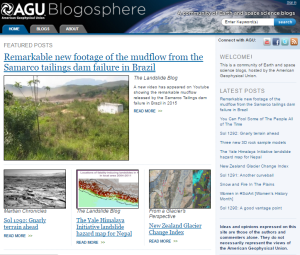
For those of you with a geotechnical background or have a general interest in learning more about rock slides and slope failures, there is an interesting website and blog for you to follow.
The website is hosted by the American Geophysical Union the world’s largest organization of Earth and space scientists. The blogs on their site are written by AGU staff along with contributions from collaborators and guest bloggers.

Landslide Blog screenshot

The independent bloggers have editorial freedom in the topics they choose to cover and their opinions are those of their authors and do not necessarily represent the views of the American Geophysical Union. This provides for some leeway on the discussions and the perspectives the writers wish to take.

Landslide Blog

One specific area they cover well in their Landslide Blog are the various occurrences of rock falls and landslides from any location around the globe. They will present commentary, images, and even videos of slope movements as they happen.
Often they will provide some technical opinion on what possibly caused the failure event to occur. The Landslide Blog has a semi-regular email newsletter that will keep you updated on new stories as they happen.
The following links are a few examples of the type of discussions they have on their website.
Here is a description of a small water dam failure in Greece.
Here is some video of the Samarco tailings runout in Brazil.
From time to time the Landslide Blog will examine mine slopes, tailings dams, and waste dump failures, however much of their information relates to natural earth or rock slopes along roads or in towns.
Some of their videos are quite fascinating, illustrating the forces behind some of earth’s natural erosion processes. Check it out for yourself.
The bottom line on all of this is that the less the mining industry is mentioned in the Landslide Blog, the better it is.
Note: You can sign up for the KJK mailing list to get notified when new blogs are posted.

Remote Sensing of Ore Grades

mining automation
Update:  This blog was originally written in March 2016 and has been updated Jan 2019. 
The mining industry must continually find ways to improve and modernize. The most likely avenue for improvement will be using new technologies as they become available.
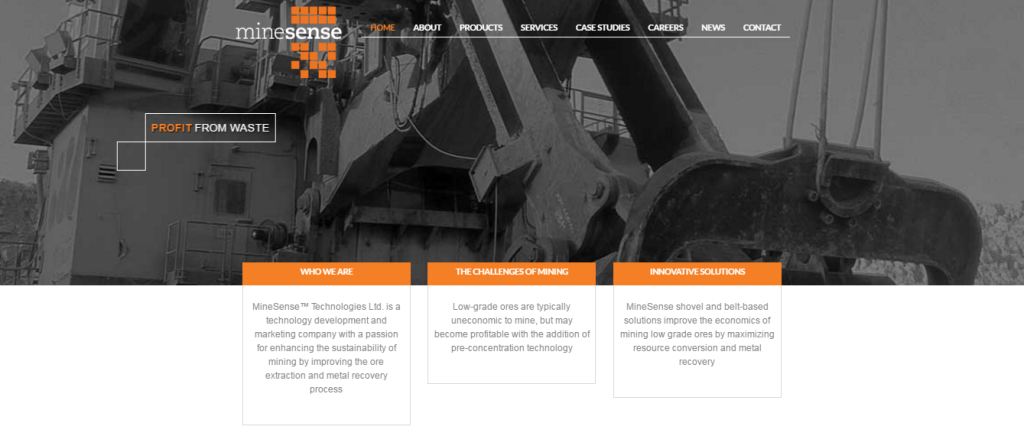
One of the players on the scene is a start-up company called “MineSense Technologies Ltd.”  They are a British Columbia company looking to improve ore extraction and recovery processes based on the sensing and sorting of low-grade ore. They hope their technology will improve mine economics by reducing the consumption of energy, water, and reagents.

Minesense

Having first written about this in 2016, its still not entirely clear to me how developed their technology is in 2019. Thus far they appear to be secretive with respect to their testing and performance results.  Certainly they are able to raise financing to keep them going.

Sensors are the answer

It appears MineSense is relying on a combination of ground-penetrating sensors with other technology in order to measure and report the grade of ore in real time.
Existing ore sorting technologies seem to focus on distinguishing mineralized material from gangue, but MineSense seems to be targeting using actual ore grades as the defining factor.
They hope to be able to eventually integrate their technology into equipment such as shovels, scooptrams, conveyors, feeders, and transfer chutes.
Their proprietary technology is based on High Frequency Electromagnetic Spectrometry and High Speed X-Ray Fluorescence sensors. Reportedly these can deliver better sensitivity and operate at high speeds. They plan to develop two distinct product lines; shovel-based systems; and conveyor belt-based systems.

ShovelSense

Their ShovelSense system would be a real-time mineral telemetry and decision system and used for measurement of ore quality while material is being scooped into the dipper, then reporting the ore quality and type to the grade control/ore routing system, and then enabling real-time online ore/waste dispatch decisions. Additional features may include tramp metal and missing tooth detection.  Sounds like a good idea, albeit some practical operating issues will need to be overcome.

BeltSense

Their belt conveyor systems (BeltSense) will use high-speed multi-channel sensing to characterize conveyed ore and waste in real time, allowing grades and tonnages to be reported and allowing ore to be diverted to correct destinations based on the sensor responses.
MineSense say that pilot units are operating at 20 tph and systems of up to 2000 tph are in the development stages.
Ore sorting has been around for a long time, with companies like Tomra, but possibly the MineSense technical approach will be different.

Conclusion

The bottom line is that we should all keep an eye on the continued development of this technology, especially as MineSense completes larger field trials.  Hopefully they will soon share results with industry since it will be critical for operators to see more actual case study data on their website.
I recognize that developing new technology will have its successes and failures. Setbacks should not be viewed as failure since innovation takes time. Hopefully after fine tuning their technology they can advance to the commercialization stage.
Note: If you would like to get notified when new blogs are posted, then sign up on the KJK mailing list on the website.  Otherwise I post notices on LinkedIn, so follow me at: https://www.linkedin.com/in/kenkuchling/.

Tailings Disposal Method Risk

mine tailings
After the Mt Polley and Samarco tailings failures, there have been ongoing discussions about the benefits of filtered (dry stack) tailings as the only way to eliminate the risk of catastrophic failure. Mining companies would all like to see risk reductions at their projects.

Filtered tailings stack

However what mining companies don’t like to see are the capital and operating costs associated with dry stacking.
The filtering cost and tailings transport cost are both higher than for conventional tailings disposal. Obviously this cost increase gets offset against improved environmental risk and simpler closure.

What should a mining company do?

In my experience, when designing a new mining project, all companies will complete a trade-off study for different tailings disposal methods and disposal sites. Contrary to some environmental narratives, mining companies really do want to know what are their tailings disposal options.  They would likely all adopt the dry stack approach if it was the most advantageous and least cost method.
The mining companies are fully aware of the benefits but the dilemma is the cost and being able to somehow justify the technology. Complicating their decision, companies also have other ways for reducing tailings risk.

The tailings decision gets complex.

In a tailings risk analysis, people will use a risk-weighting approach to assign an expected economic impact to their tailings plans. For example, if the cost of a failure is $200 million and the risk is 0.1%, then the Expected Cost is $200,000. The problem with this is its based on a theoretical calculation on an assumed likelihood of failure.
In reality either the dam will fail or it won’t.  So failure remediation money will be spent ($200M) or it won’t be spent ($ zero), it won’t be partially spent ($200k).
The accepted tailings risk therefore becomes a subjective factor.
While implementing a dry stack may reduce the risk of catastrophic failure to near zero, implementing a $100,000 per year monitoring program on a conventional tailings pond will reduce its risk to a degree.
Implementing a more expensive $500,000 per year monitoring program would reduce that risk even further.
Installing in a water treatment plant to enable periodic water releases may further lower the tailings risk.
The company can look at various mitigation options to keep lowering their risk, although none of the options would necessarily bring the risk down to zero. Ultimately the company could compare the various risk mitigation options against the dry stack costs in order to arrive at an optimal path forward.  At that point the costs for dry stack may be competative.

What level of risk is acceptable?

So the question ultimately becomes how low does one need to bring the tailings risk before it is acceptable to shareholders, regulators, and the public. I don’t think the answer is that one must lower the risk down to zero. There are not many things in today’s world that have zero risk. Driving a car, air travel, shipping oil by ocean tanker, having a gas furnace in your house.. none of these have zero risk yet we accept them as part of life.
Environmental groups continually discuss ways of forcing regulators and mining companies to take action against the risk of tailings failure. This is commendable.
However they generally fail to provide any guidance on what level of risk would be acceptable to them or to the public. It is difficult for these groups to actually define what an acceptable risk level is. They offer no solutions, other than its either zero risk or shut down all mining.

Conclusion

We know that mining is here to stay so we all should work together towards solutions.
The solutions need to be realistic in order to be taken seriously and to play a real role in redefining tailings disposal. Dry stack may not be the only solution and we should be looking for more ways to improve tailings disposal.
Since these other options don’t seem to be available yet, dry stack tends to offer the best solution in most circumstances.  I have written another blog on this topic where I suggest the industry just bite the bullett and go to dry stack in all new projects.  The trend appears to be going that way but no where near 100% acceptance.   You can read that post at this link  “Fluid Tailings – Time to Kick The Habit?”


Note: If you would like to get notified when new blogs are posted, then sign up on the KJK mailing list on the website.  Otherwise I post notices on LinkedIn, so follow me at: https://www.linkedin.com/in/kenkuchling/.

Do Any Junior Producers Model a Gold ETF?

junior mining company
I have often wondered if any of the smaller gold producers have ever considered modelling their business plan similar to a gold Exchange Traded Fund (“ETF”).
This hybrid business model may be a way for companies to provide shareholders a way to leverage themselves to physical gold rather than leveraging to the performance of a mine.

Let me explain further

Consider two identical small mining companies each starting up a new mine. Their projects are identical; 2 million gold ounces in reserves with annual production rate of 200,000 ounces with a 10 year mine life. On an annual basis, let’s assume their annual operating costs and debt repayments could be paid by the revenue from selling 180,000 ounces of gold. This would leave 20,000 gold ounces as “profit”. The question is what to do with those 20,000 ounces?

Gold Dore

Company A

Company A sells their entire gold production each year. At $1200/oz, the 20,000 oz gold “profit” would yield $24 million. Income taxes would be paid on this and the remaining cash can be spent or saved.
Company A may decide to spend more on head offices costs by adding more people, or they may spend money on exploration, or they could look at an acquisition to grow the company. There are plenty of ways to use this extra money, but returning it to shareholders as a dividend isn’t typically one of them.
Now let’s jump forward several years; 8 years for example. Company A may have been successful on grassroots exploration and added new reserves but historically exploration odds are working against them. If they actually saved a portion of the annual profit, say $10M of the $24M, after 8 years they may have $80M in cash reserves.

Company B

Company B only sells 180,000 ounces of gold each year to cover costs.  It puts the remaining 20,000 ounces into inventory. Their annual profit-loss statement shows breakeven status since their gold sales only cover their financial commitments. In this scenario, after 8 years Company B would have 160,000 gold ounces in inventory, valued at $192 million at a $1200 gold price.
If you’re an investor looking at both these companies in the latter stages of their mine life, which one would you rather invest in?
Company A has 400,000 ounces (2 years) remaining in mineral reserves and $80M cash in the bank. Company B also has 400,000 ounces of mineral reserves and $192 million worth of gold in the vault. If I’m a bullish gold investor and foresee a $1600/oz gold price, then to me Company B might theoretically have $256M in the vault (160k oz x $1600). If I’m a super bullish, their gold inventory could be worth a lot more..theoretically.

Which company is worth more?

I assume that the enterprise value (and stock price) of Company A would be based on its remaining reserves at some $/oz factor plus its cash in the bank. Company B could be valued the same way plus its gold inventory. So for me Company B may be a much better investment than Company A in the latter stages of its mine life. In fact Company B could still persist as an entity after the mine has shutdown simply as a “fund” that holds physical gold. If I am a gold investor, then Company B as an investment asset might be of more interest to me.
If Company A had good exploration results and spend money wisely, then it may have more value but not all companies are successful down this path.

Conclusion

It appears that most of the time companies sell their entire annual gold production to try to show profit on the annual income statement. This puts cash in the bank and shows “earning per share”.
My question is why not stockpile the extra gold and wait for gold prices to rise?  This might be an option if the company doesn’t really need the money now or doesn’t plan to gamble on exploration or acquisitions.
This concept wouldn’t be a model for all small miners but might be suitable for a select few companies to target certain types of gold investors.
They could provide an alternative mining investment that might be especially interesting in the last years of a mine life. Who really wants to buy shares in a company who’s mine is nearly depleted?  I might buy shares, if they still hold a lot of gold.
Note: You can sign up for the KJK mailing list to get notified when new blogs are posted.