


 The number of independent mining consultants is increasing daily as more people reach retirement age or are made redundant.
Nowadays it seems everyone is gradually becoming a self-employed consultant. Possibly that is because retirees need the money. Maybe they need something post-career to keep them occupied.
Here are a couple of lesser known ways to generate income for those of you choosing this new career path.
One of these has been around for awhile while the other is relatively new. I only have personal experience with one of them.
GLG – Give me an hour
 GLG (https://glg.it/) is one of several information services that provide short term consulting assignments. By short term, I mean 1 to 2 hours long.
GLG has been around for many years providing a platform for connecting those seeking information with those who have it.
Typically someone, like an industry analyst, poses a question that gets sent out to relevant experts.
The question could be something like “XX Mining Company owns the Bonanza mine and our client would like to learn more about that operation including reserves and operating costs”.
Anyone who has the requisite knowledge can accept the consultation and submit their credentials for review. If you’re selected, such consultations take place very soon. They can be for 1 to 2 hours and pay $200 to $500 dollars. GLG are very strict that rumors or confidential information are not disclosed during any of the consultations. Only public information is to be used.
Since I have a background in potash, I am often issued potash industry related requests. Questions posed might be “Can you describe the Saskatchewan potash industry, including operations, expansions, marketing plans, and operating costs”. That’s a heck of a lot of information to provide in a 1 to 2 hour time frame for $400. Likely very few people would possess all of that knowledge. I assume their approach is to consult with several different experts and eventually piece together the puzzle.
Check out the GLG website. It’s free to sign up as an expert and maybe you’ll get yourself an assignment. I think there is even a reward for referrals (which I assume I will get shortly).
Digbee – What’s wrong now?
 Digbee (https://thedigbee.com/) is a relatively new online venture that I’ve not yet used. It is essentially a due diligence platform where one can hire experts to undertake targeted due diligence studies.
Furthermore any expert can prepare an independent review on a topic of their choice and then offer it up for sale.
The typical report costs $1,640 to $4,680 dollars. As of March 2020, they have 13 reports for sale and 5 more in the pipeline. Here’s a brief explainer video from the founder
The report list can be seen at this link. The reports appear to be focusing on potential technical flaws in a project. Some titles are listed below.
-
“Sample recoveries at shallow depths is a concern, this is not helped by the total lack of QAQC data” an analysis of Bomboré ($4,680)
-
“Has the extensive testwork at Bomboré finally found an optimum process to proceed to development?” ($4,680)
-
“Alpala’s technical merits and compares its cost estimate to other block caving development projects.” ($3,120).
-
“Cerro Blanco’s very complicated geology in Guatemala may mean more expensive mining techniques will be required.” ($4,680)
-
“Epithermal geologist raises questions on the reliability of the low grade resource at DeLamar.” ($3,120)
-
“What impact does serpentinisation have on the confidence of recovered grade at RNC’s Dumont project?” ($4,680)
I’m not sure how many report copies each consultant will be able to sell . However a click-bait title may help sell at least one copy. That would be to the company the report is about. Perhaps major investors or financial analysts will also buy a copy.
So if you have some free time, pick a project that’s on your radar and write a review. It appears that you’ll get a 50% share of the revenue. To learn more, read an article at this link.
I’m curious if the Digbee platform will continue to grow. It’s unique to see independent research identifying potential issues with mining projects. Someone jokingly mentioned that these are the anti-newsletter writers. I’m also curious to see how long before the lawyers and lawsuits begin to show up.
Given the relatively low price for these reports, I think one might make a lot more money (from TMZ) if one wrote a report titled “Famous Hollywood starlet has scandalous affair with mining company CEO”.
Conclusion

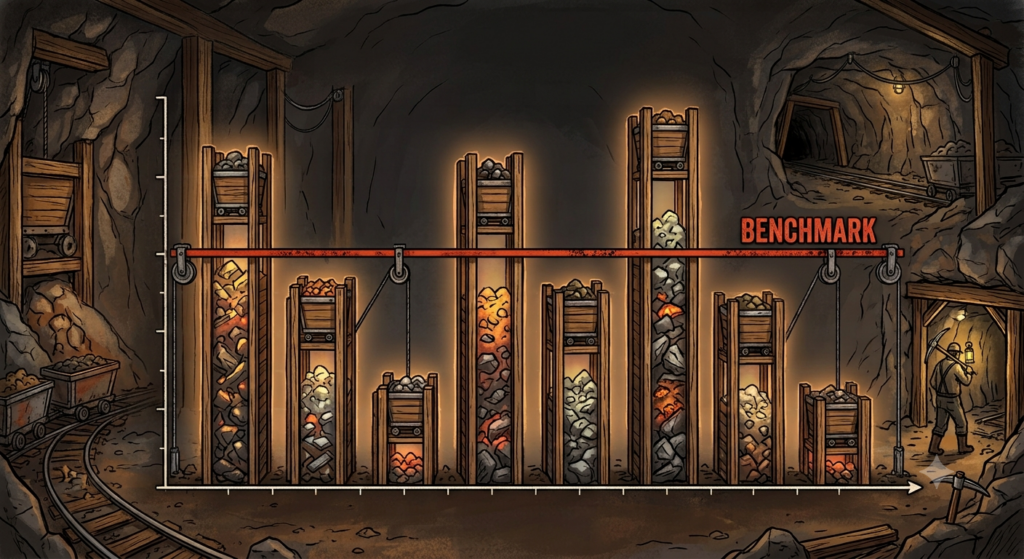 Benchmarking companies is the process of measuring performance of a company’s attributes against those of another. Ideally the benchmarking comparison is made against what are considered to be the best in the industry. Sometimes however the comparison is simply made between industry peers.
 We often see junior mining companies benchmarking themselves against others. Sometimes corporate presentations provide graphs of enterprise value per gold ounce to demonstrate that a company is always undervalued.
 Lenders may have observers at site monitoring both construction progress and cash outlays. Shareholders and analysts are watching for news releases that update the capital spending. Their concerns are well founded due to numerous cases of significant cost over-runs.
 It would be a positive thing if the mining industry (or other concerned parties) could work together to create open source project databases. These databases would incorporate summary information and cost information for global mining projects. The information is already out there, it just needs to be compiled.
 Benchmarking can be a great tool when done correctly. Benchmarking capital costs might bring more transparency to the project development process. It may help convince nervous investors that the proposed costs are reasonable.
 Reading it further, it was apparent that their study consultant, Ausenco, was being paid in company stock in lieu of cash. The arrangement included an initial financing of $750k with a further $375k to follow once the pre-feasibility study was 75% complete. Upon completion of the study another share payment was due.
 I have never been in a situation where I was consulting with company shares as my compensation. Neither have I ever managed a study where outside consultants were being paid in shares. However I can see the possibility of interesting dynamics at play.
 Regarding the first item “impartiality”, in the past there have been questions raised about the impartiality of engineering firms. I first recall reading this claim many years ago in a public response to a mining EIA application. Unfortunately I cannot find the exact source now.
 It would be interesting to know how many consulting firms would be willing to accept compensation solely in shares. Stock prices move up and down and the outcome of the study itself can have an impact on share performance.
 In general to get financing and investor interest, development projects must demonstrate a high NPV, high IRR, and short payback period. This requirement tends to apply more to the small and mid tiered companies than to the major companies. The majors normally have different access to financing.
 There are several scenarios where NPV analysis decision making may conflict with the objectives of sustainable mining. Here are a few examples.
 4. Low grade ore stockpiling can help to increase early revenue and profit, thereby improving the project NPV and payback. Stockpiling of low grade and prioritization of high grade means that lower grade ore will be processed in the later stages of the project life. Who hasn’t been happy to develop a mine schedule with the grade profile shown on the right?
 7. Accelerated depreciation, tax and royalty holidays are types of economic factors that will improve NPV and early payback. They are one tool governments use to promote economic activity. These tax holidays will greatly enhance the NPV when combined with high grading and waste stripping deferral.
 NPV is one of the standard metrics used to make project decisions. The deferral of upfront costs in lieu of future costs is favorable for cashflow and investor returns. Similarly, increasing early revenue at the expense of future revenue does the same. Both approaches will help satisfy the financing concerns. However they may not be advantageous for creating long term sustainable projects.
 We hear a lot about the need for the mining industry to adopt sustainable mining practices. Is everyone certain what that actually means? Ask a group of people for their opinions on this and you’ll probably get a range of answers. It appears to me that there are two general perspectives on the issue.
 The solutions proposed to foster sustainable mining depend on which perspective is considered.
 There are teams of smart people representing mining companies working with the local communities. These sustainability teams will ultimately be the key players in making or breaking the sustainability of mining industry. They will build and maintain the perception of the industry.
 I was at the 2019 Progressive Mine Forum in Toronto and a presentation was given on underground compressed air storage. The company was Hydrostor (
 Converting an abandoned mine into a power storage facility will still have its challenges. Cost and economic uncertainty are part of that. In addition, permitting such a facility will still require some environmental study.
 It’s always open to debate who these 43-101 technical reports are intended for. Generally we can assume correctly that they are not being written mainly for geologists. However if they are intended for a wider audience of future investors, shareholders, engineers, and C-suite management, then (in my view) greater focus needs to be put on the physical orebody description.
 I would like to suggest that every technical report includes more focus on the operational aspects of the orebody.
 Improving the quality of information presented to investors is one key way of maintaining trust with investors. Accordingly we should look to improve the description of the mineable ore body for everyone. In many cases it is the key to the entire project.
 Electrostatic separation is a dry processing technique in which a mixture of minerals may be separated according to their electrical conductivity. The potash industry has studied this technology for decades.
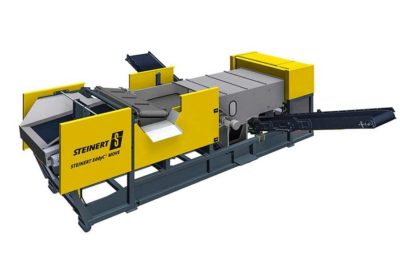 The recovery of non-ferrous metals is the economic basis of every metal recycling system. There is worldwide use of eddy separators.
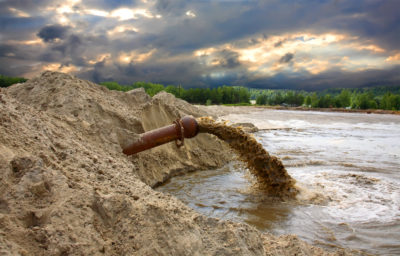
 Given the contentious nature of water supply and slurried solids at many mining operations, industry research into dry processing might be money well spent.
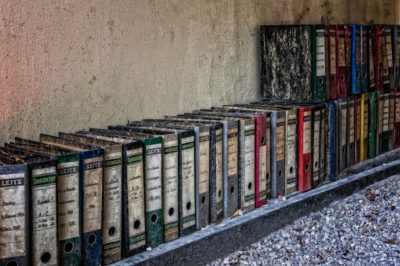 In the past there would be binders with detailed calculations and backup for the different parts of the study. Typically there was a binder for the Executive Summary and separate sections (i.e. binders) for Geology, Mining, Processing, Infrastructure, Capital Cost, Operating Cost, Environmental, Project Execution, and Economic Analysis, etc.
 The original intent of the 43-101 Technical Report was for it to be a summary document, only about 80-150 pages in length. The intent was to simplify all the technical work for the benefit of non-technical investors. Currently I have noticed that in many cases the 43-101 report is now the entire feasibility study document.
 My recommendation is that, where budgets permit, mining companies return to the days of preparing the comprehensive feasibility study document. It’s the right thing to do.
 If any mining industry credibility has been lost, re-establishing it should be important. One way to start doing this is to focus on creating the type of reports that best serve the needs of the industry stakeholders.
 The technology consists of a floating LNG (liquefied natural gas) turbine power plant combined with high capacity seawater desalinization capabilities. MODEC is offering the FSRWP® (Floating Storage Regasification Water-Desalination & Power-Generation) system.
 From a green mining perspective, the FSRWP produces clean power with the highest thermal efficiency and lowest carbon foot-print.
 Currently there are three mooring options for the floating system that should fit most any tidewater situation.
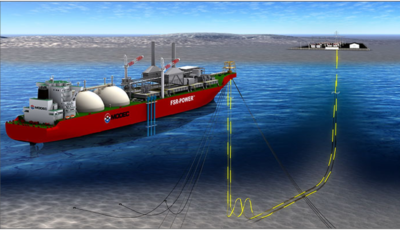 The bottom line is that if your mining project is near shore, and has both water supply and power issues, take a look at the FSRWP technology. One might say it is greener technology by using LNG (rather than coal, heavy fuel oil, or diesel) to generate power. At the same time it avoids competition with locals for access to fresh water.