
Articles tagged with: EIA

Power Generation & Desalinization – An Idea that Floats

Access to a fresh water supply and a power supply are issues that must be addressed by many mining projects. Mining operations may be in competition with local water users for the available clean water resources. In addition, the greenhouse gas emissions from mine site power plants are also an industry concern. If your project has both water and power supply issues and it is close to tidewater, then there might be a new solution available.
I recently attended a presentation for an oil & gas related technology that is now being introduced to the mining industry. It is an innovative approach that addresses both water and power issues at the same time.
The technology consists of a floating LNG (liquefied natural gas) turbine power plant combined with high capacity seawater desalinization capabilities. MODEC is offering the FSRWP® (Floating Storage Regasification Water-Desalination & Power-Generation) system.
MODEC also has associated systems for power only (FSR-Power®) and water only (FSR-Water®)

FSRWP capabilities

The technology is geared towards large capacity operations that have access to tidewater. It provides many tangible and intangible operational and environmental benefits.  It can:
  • Generate fresh water supply (10,000 – 600,000 m3 /day)
  • Generate electrical power (80 to 1000 MW) using LNG
  • Can provide power inland (>100 km) from a tidewater based floating power plant
  • Can provide natural gas distribution on land via on-board re-gasification systems
  • Has LNG storage capacity of 135,000 cu.m
  • Has a refueling autonomy of 20 to 150 days
  • Allows low cost marine delivery of bulk LNG supply

Procurement & Application

The equipment can be procured in several ways. For instance it can be contracted as an IPP (Independent Power Producer), purchased as an EPCI (Engineering, Procurement, Construction and Installation), BOO (Build, Own and Operate) or BOOT (Build, Own, Operate and Transfer).
Typically it takes 18-24 months of contract award to deliver to the project site, although temporary power solutions can be provided within 60-90 days.
From a green mining perspective, the FSRWP produces clean power with the highest thermal efficiency and lowest carbon foot-print.
See the table for a comparison of different power generation efficiencies and carbon emissions per kW.
Gas turbines are not new technology to MODEC.  They currently own & operate 42 such generators, which can produce roughly 43 MW (each) in combined-cycle mode.

Mooring options

Currently there are three mooring options for the floating system that should fit most any tidewater situation.
Jetty or Dolphin mooring is suitable for protected areas or near-shore applications where the water depth is in the range of 7 to 20 meters.
Tower Yoke mooring is ideal for relatively calm waters where the water depth is between 20 to 50 meters.
External Turret mooring is similar to a Tower-Yoke and is ideal for water depths exceeding 50 meters or where the seabed drops off steeply into the ocean.

Power transmission

Twenty years ago it was impractical to transmit AC power long-distances and subsea power cable technology was not as advanced as it is today. Hence an offshore power plant like a FSRWP was not technically viable. Due to R&D efforts over the last 15 years it is now possible to economically transmit AC. For example it is possible to transmit up to 100 MW over 100 miles through a single subsea cable. In addition, it is also viable to transit 200 MW at 145 kV from a vessel to shore.

Water treatment

Modern FSRWP’s use reverse osmosis membrane technology to produce industrial or potable water.  This is similar to most conventional onshore desalination plants.
The main benefits of floating offshore desalination are increased overall thermal efficiency if both power and water production are combined on a single vessel. In addition, seawater sourced offshore and rejected brine discharged offshore minimizes risk to coastal marine life.

Conclusion
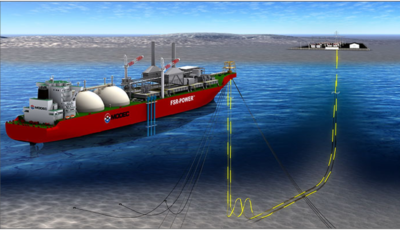
The bottom line is that if your mining project is near shore, and has both water supply and power issues, take a look at the FSRWP technology. One might say it is greener technology by using LNG (rather than coal, heavy fuel oil, or diesel) to generate power.  At the same time it avoids competition with locals for access to fresh water.
This technology won’t be suitable for all mining situations, but perhaps your mine site fits the model. Reportedly rough costs for power are in the range of $0.10-$0.14/kwh with a capital cost of $1M-$1.5M per MW.
There will be minimal closure costs associated with dismantling the power plant.  One just floats it away at the end of the mine life.
Check out the MODEC website if you wish to learn more: https://www.modec.com/fps/fsrwp/index.html
Note: If you would like to get notified when new blogs are posted, then sign up on the KJK mailing list on the website.  Otherwise I post notices on LinkedIn, so follow me at: https://www.linkedin.com/in/kenkuchling/.
For those interested in reading other mining blogs, check out the Feedspot website at the link below. They list 60 mining related blog sites that you check out. https://blog.feedspot.com/mining_blogs/
Share

Tailings Disposal Method Risk

mine tailings
After the Mt Polley and Samarco tailings failures, there have been ongoing discussions about the benefits of filtered (dry stack) tailings as the only way to eliminate the risk of catastrophic failure. Mining companies would all like to see risk reductions at their projects.

Filtered tailings stack

However what mining companies don’t like to see are the capital and operating costs associated with dry stacking.
The filtering cost and tailings transport cost are both higher than for conventional tailings disposal. Obviously this cost increase gets offset against improved environmental risk and simpler closure.

What should a mining company do?

In my experience, when designing a new mining project, all companies will complete a trade-off study for different tailings disposal methods and disposal sites. Contrary to some environmental narratives, mining companies really do want to know what are their tailings disposal options.  They would likely all adopt the dry stack approach if it was the most advantageous and least cost method.
The mining companies are fully aware of the benefits but the dilemma is the cost and being able to somehow justify the technology. Complicating their decision, companies also have other ways for reducing tailings risk.

The tailings decision gets complex.

In a tailings risk analysis, people will use a risk-weighting approach to assign an expected economic impact to their tailings plans. For example, if the cost of a failure is $200 million and the risk is 0.1%, then the Expected Cost is $200,000. The problem with this is its based on a theoretical calculation on an assumed likelihood of failure.
In reality either the dam will fail or it won’t.  So failure remediation money will be spent ($200M) or it won’t be spent ($ zero), it won’t be partially spent ($200k).
The accepted tailings risk therefore becomes a subjective factor.
While implementing a dry stack may reduce the risk of catastrophic failure to near zero, implementing a $100,000 per year monitoring program on a conventional tailings pond will reduce its risk to a degree.
Implementing a more expensive $500,000 per year monitoring program would reduce that risk even further.
Installing in a water treatment plant to enable periodic water releases may further lower the tailings risk.
The company can look at various mitigation options to keep lowering their risk, although none of the options would necessarily bring the risk down to zero. Ultimately the company could compare the various risk mitigation options against the dry stack costs in order to arrive at an optimal path forward.  At that point the costs for dry stack may be competative.

What level of risk is acceptable?

So the question ultimately becomes how low does one need to bring the tailings risk before it is acceptable to shareholders, regulators, and the public. I don’t think the answer is that one must lower the risk down to zero. There are not many things in today’s world that have zero risk. Driving a car, air travel, shipping oil by ocean tanker, having a gas furnace in your house.. none of these have zero risk yet we accept them as part of life.
Environmental groups continually discuss ways of forcing regulators and mining companies to take action against the risk of tailings failure. This is commendable.

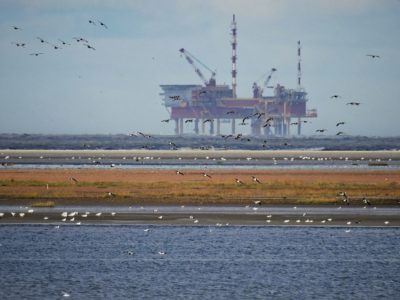
However they generally fail to provide any guidance on what level of risk would be acceptable to them or to the public. It is difficult for these groups to actually define what an acceptable risk level is. They offer no solutions, other than its either zero risk or shut down all mining.

Conclusion

We know that mining is here to stay so we all should work together towards solutions.
The solutions need to be realistic in order to be taken seriously and to play a real role in redefining tailings disposal. Dry stack may not be the only solution and we should be looking for more ways to improve tailings disposal.
Since these other options don’t seem to be available yet, dry stack tends to offer the best solution in most circumstances.  I have written another blog on this topic where I suggest the industry just bite the bullett and go to dry stack in all new projects.  The trend appears to be going that way but no where near 100% acceptance.   You can read that post at this link  “Fluid Tailings – Time to Kick The Habit?”


Note: If you would like to get notified when new blogs are posted, then sign up on the KJK mailing list on the website.  Otherwise I post notices on LinkedIn, so follow me at: https://www.linkedin.com/in/kenkuchling/.
Share

Mining Takeovers – Should Governments Be (Heavily) Involved?

Mine acquisition
I have seen some on-line discussions about whether governments should be regulating corporate takeovers, some of which may be outside their own borders. The fear from some groups is that mine assets may be acquired by less than desirable acquirers.
One specific example that I have seen is related to the 2015 disposition of foreign resource assets by both Barrick and Ivanhoe to Zijin, a Chinese company.  I don’t know much about Zijin, other than having heard Norway’s government directed its $790 billion oil fund to sell holdings in some companies because of their environmental performance. Zijin was one of these companies.

In light of the Norway decision, some groups are questioning whether Zijin should be allowed to buy mining assets currently owned by Canadian or American companies.

Its a balancing act

It appears that some groups would like their governments to step in and prevent a company from selling their mining assets to another company that may have a poor reputation or limited financial capacity. The fear is the new company would operate in a non-sustainable manner and ignore local environmental rules.
Government sanctioning of deals gets tricky in that how do they define which companies have poor reputations and which don’t.  Also how can they dictate to the shareholders of a company, possibly nearing bankruptcy, that they cannot sell their assets to a certain interested party?
Governments have stepped in and blocked acquisitions in the past but these were mainly related to deals involving antitrust issues or technology of national interest.
It will be interesting to see whether the idea of governments sanctioning the acceptability of acquirers in the mining industry will gain traction.

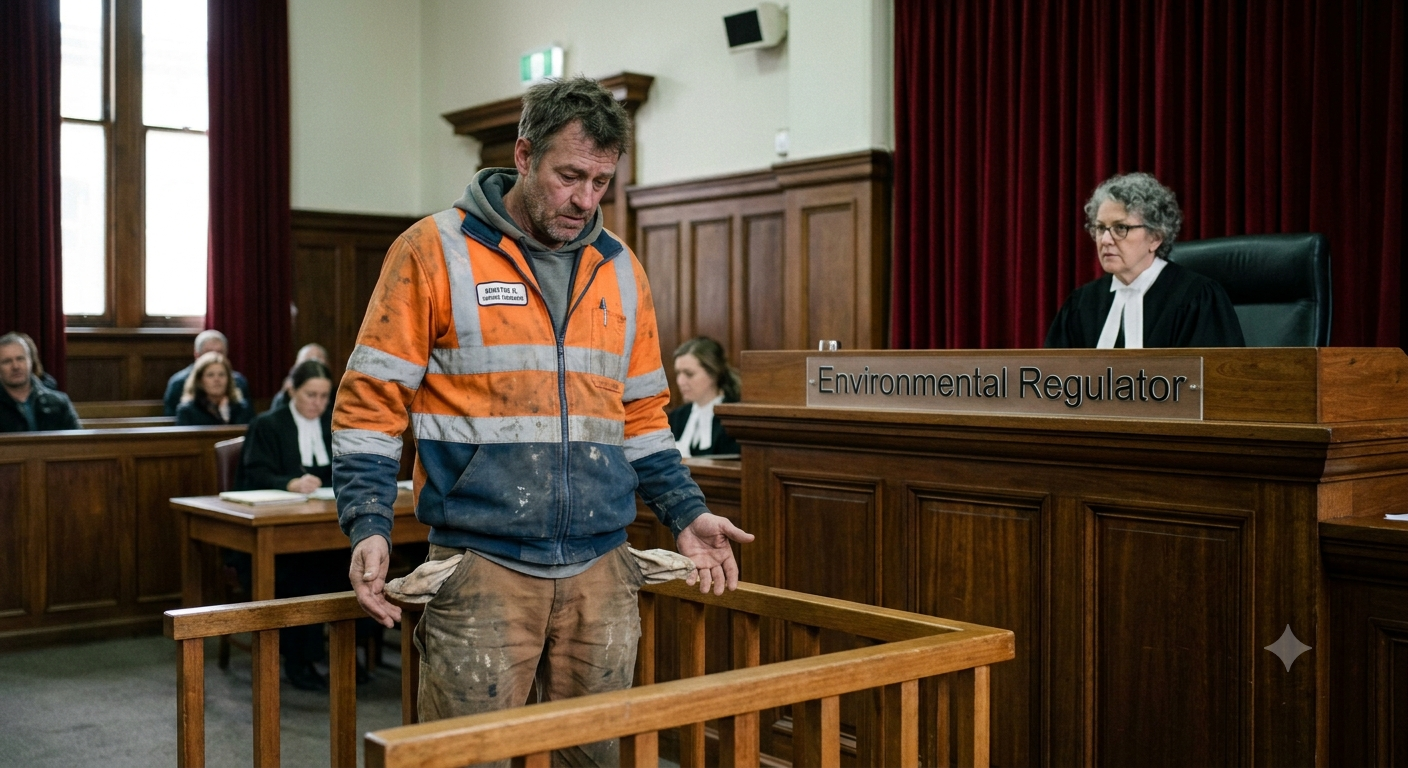
It may be an overstep for the government of one country to block the acquisition of a foreign property when the owner may not have the capability to develop the project while the acquirer does.
The foreign government may want to see their own resources  developed but another government may be hindering that by blocking transfer of ownership.
The last thing we want are more country-to-country disputes. I presume the only option in this case is to revoke the mineral concessions and assign them to someone willing to develop them.  One company will lose an asset, which creates new issues related to compensation.  It also harms the reputation of that country as a place to invest in.  Unfortunately it had no choice if a foreign government was getting in the way.

Conclusion

The bottom line is whether the government of one country have the veto rights to prevent development in another country?  Does the government of one country have the right to decide the environmental standards in another via prevention of an asset sale?
This will be an interesting issue to continue to watch in the future.
Note: You can sign up for the KJK mailing list to get notified when new blogs are posted.
Share

Mine Approvals May Be Hinging on the Corporate Bank Account

EIA EIS EISA
In the past I have seen some industry observers argue that mine environmental approvals should be linked to the overall financial health of the parent company.
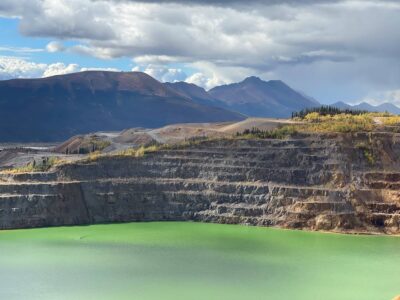
Their point was raised in regard to the Mount Polley tailing dam incident as well as other notable tailings failures. Today one could also add the Victoria Gold Eagle Mine heap leach failure into the conversation.
The logic behind their idea was that the potentially high cleanup cost for tailings failures could exceed the financial capacity of a small mining company and thus the cleanup cost would need to be borne by the taxpayer.

Are reclamation bonds of sufficient size?

Closure bonds for final reclamation are standard practice in current permitting approvals and part of the normal course of business. However what was being proposed is the requirement to have sufficient corporate funds in the bank account to pay unexpected remediation costs for some hypothetical failure. Orderly closure is one thing, but cleanup & closure is entirely different. The costing for this situation has not been part of the current environmental approval process as far as I know. Depending on the type of failure scenario envisioned, a hypothetical cleanup cost could be low or enormous.
Along with the fiscal capacity requirement, another proposed idea was that all the mining companies in a jurisdiction each contribute into a regional failure cleanup fund. The ultimate goal of that idea could be twofold, either for better environmental practices, or simply to curtail mine development by handcuffing smaller companies.

Pro’s and Con’s of a Fiscal Capacity Limit

Linking environmental approval of a mining project to the proponent company’s fiscal capacity is a current policy idea used in various forms (e.g., financial assurance/bonding requirements, closure guarantees, insurance mandates). Here are the main arguments on each side for applying a corporate fiscal limit:

Arguments in favor (Pro) of Fiscal Capacity

  1. Ensures funds exist for all environmental remediation: Mining causes long-term environmental liabilities (tailings, acid mine drainage, land rehabilitation). If a company lacks fiscal capacity, it may be unable to pay for cleanup, especially after project closure or in case of failure, leaving the taxpayers to cover costs (as has happened with abandoned mines worldwide).
  2. Reduces moral hazard: Undercapitalized companies have less “skin in the game.” Linking approval to fiscal strength discourages speculative or shell companies from taking on projects they can’t responsibly manage, reducing the incentive to cut corners on environmental compliance to save money.
  3. Protects against bankruptcy-driven abandonment: A financially fragile company facing a downturn in commodity prices might declare bankruptcy and walk away from environmental obligations. This is not uncommon in reality. Fiscal capacity requirements act similarly to insurance, guaranteeing a fallback source of funds.
  4. Improves accountability and long-term compliance: Companies with strong finances are generally better able to invest in ongoing monitoring, new technology, and adaptive management of environmental risks over a project’s life cycle, which can span decades.Aligns incentives with the “polluter pays” principle: It cements the idea that the party responsible for potential damage should have the resources to address it, rather than shifting the burden to governments or future generations.
Arguments against (Con) of Fiscal Capacity
  1. Creates a barrier to entry, favoring large incumbents: Requiring high fiscal capacity could exclude smaller, junior mining companies, which are often responsible for exploration in the sector, from obtaining approvals, even if their specific project poses low environmental risk.
  2. Conflates financial strength with environmental performance: A company can be wealthy and still have poor environmental practices, or be smaller/newer but employ excellent environmental management and technology. Fiscal capacity is an imperfect measure of actual environmental risk or the quality of a mitigation plan. However larger companies have the incentive to do the right thing since they may have multiple operations under scrutiny.
  3. Risk of double regulation or redundancy: Many jurisdictions already require financial assurance instruments (bonds, insurance, trust funds) specifically earmarked for closure and remediation. Tying general approval to fiscal capacity could duplicate or conflict with these more targeted mechanisms. However do these assurances consider catastrophic failure cleanup?
  4. Could be gamed or is hard to assess accurately: Fiscal capacity can fluctuate over time, be hidden through corporate structuring (e.g., shell subsidiaries, transfer pricing), or be inflated through parent company guarantees that may not hold up in practice. Regulators may lack the tools to meaningfully audit ongoing financial health.
  5. May discourage joint ventures and innovative financing: Some legitimate, well-managed projects rely on external financing, partnerships, or staged capital. A blanket fiscal capacity threshold at the initial approval stage might penalize projects that have viable, if less conventional, financial structures.
  6. Doesn’t address the root issue: Even fiscally strong companies can choose not to prioritize environmental protection absent proper enforcement. The real solution to compliance may be more robust monitoring, penalties, and independent audits (not upfront financial capacity).

Conclusion

In reality, regulators tend to separate these concerns. Environmental approval focuses on adequacy of the environmental management plan. Financial capacity requirements (bonds, insurance, escrow accounts) are imposed as a condition tied specifically to closure and remediation liabilities. Financial capacity is not used a criterion for approving the project itself.
It will be interesting to see if this suggested permitting approach gains any traction in the future because it could have a significant impact on the operating approach of junior mining.
It would raise the question as to whether any small junior miner should be given environmental approval to put their project into production.  I do know of cases where First Nations have a preference that a project on their lands is put into production by a well reputation major-intermediate company and not the current junior miner owners of the project.  The major has backstop money, the junior does not.


Note: You can sign up for the KJK mailing list to get notified when new blogs are posted. Follow me on Twitter at @KJKLtd for updates and other mining posts.   The entire blog post library can be found at https://kuchling.com/library/
For some free mining calculator apps, including project timelines and a simplified cashflow modeller, check out this website https://sites.google.com/view/drillingdown
Share