

When metals prices are high, we are generally told that we should lower the cutoff grade. Our cutoff grade versus metal price formula tells us this is the correct thing do. Our grade-tonnage curve reaffirms this since we will now have more metal in the mineral reserve.
But is lowering the cutoff grade the right thing?
Books have been written on the subject of cutoff grades where readers can get all kinds of detailed logic and calculations using Greek symbols (F = δV* − dV*/dT). Here is one well known book by Ken Lane, available on Amazon HERE.

 Recently we have seen a trend of higher cash costs at operating mines when commodity prices are high. Why is this?

It may be due to higher cost operating inputs due to increasing labour rates or supplies. It may also be partly due to the lowering of cutoff grades. This lowers the head grade, which then requires more tonnes to be milled to produce the same quantity of metal.
A mining construction manager once said to me that he never understood us mining guys who lower the cutoff grade when gold prices increase. His concern was that since the plant throughput rate is fixed, when gold prices are high we suddenly decide to lower the head grade and produce fewer and higher cost ounces of gold.
Do the opposite
His point was that we should do the opposite. When prices are high, we should produce more ounces of gold, not fewer. In essence, periods when supply is low (or demand is high) may not be the right time to further cut supply by lowering head grades.
Now this is the point where the grade-tonnage curve comes into play.
Certainly one can lower the cutoff grade, lower the head grade and produce fewer ounces of gold. The upside being an extension in the mine life. A company can report more ounces in reserves and perhaps the overall image of the company looks better (if it is being valued on reserves). To read more about the value of grade-tonnage curves, you check out this blog post “Grade-Tonnage Curves – Worthy of a Good Look“.
What if metal prices drop back?
The problem is that there is no guarantee that metal prices will remain where they are and the new lower cutoff grade will remain where it is. If the metal prices drop back down, the cutoff grade will be increased and the mineral reserve will revert back to where it was. All that was really done was accept a year of lower metal production for no real long term benefit.
This trade-off contrasts a short term vision (i.e. maximizing annual production) against a long term vision (i.e. extending mineral reserves).
Conclusion
The bottom line is that there is no simple answer on what to do with the cutoff grades. Hence there is a need to write books about it.
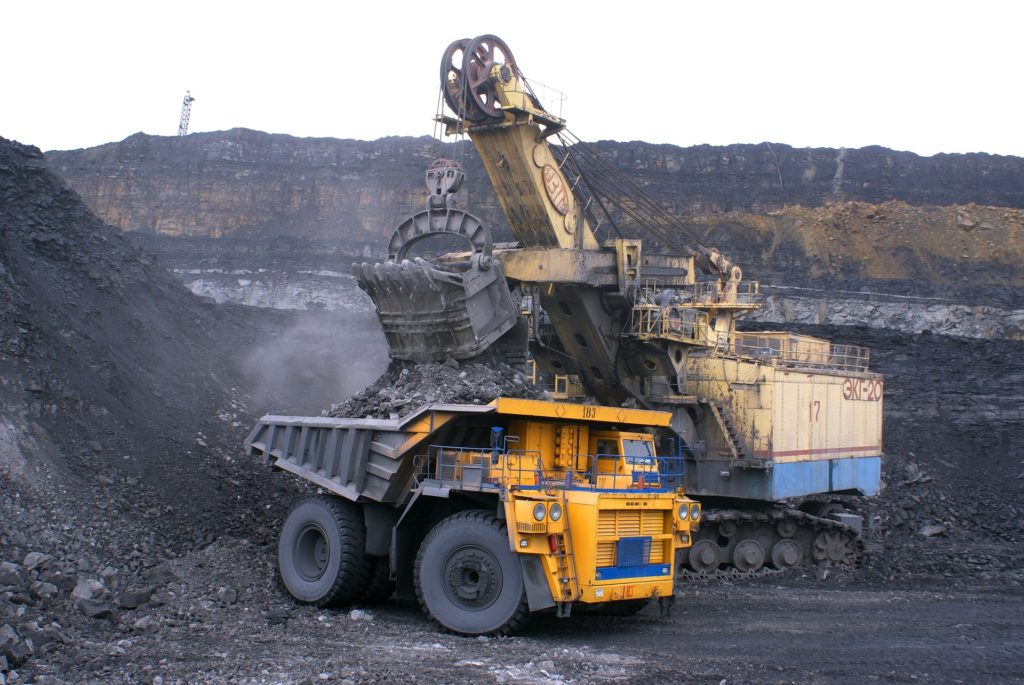 Different companies have different corporate objectives and each mining project will be unique with regards to the impacts of cutoff grade changes on the orebody.
I would like to caution that one should be mindful when plugging in new metal prices, and then running off to the mine operations department with the new cutoff grade. One should fully understand both the long term and short term impacts of that decision.
In another blog post on the cutoff grade issue, I discuss whether in poly-metallic deposits the cutoff should be based on metal equivalent or block NSR value. Neither approach is perfect, but I prefer the NSR option. You can read that post at “Metal Equivalent Grade versus NSR for Poly-Metallics“.


 (Orig-2016 Updated-2026)
 Like the tailings design, would it be a good idea for companies to have a second set of eyes take a look at the resource estimates developed by their independent QP’s? Probably yes, with a few caveats. First I would like to clarify that an independent review can consist of three levels of review.